
SHAF/B/13/1/10
·
Stuk
·
23 Nov. [1987]
Part of Papers of Sir Peter Shaffer
3351 results with digital objects
Show results with digital objects
PETH/9/10
·
Stuk
·
27 Nov. 1911
Part of Pethick-Lawrence Papers
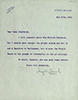
23 Bruton Street, W.—In Mrs Pethick-Lawrence’s case the proper course would probably be to move the King’s Bench on the ground of informality in the proceedings rather than to ask a question in Parliament.
BENS/B/10
·
Stuk
·
Lent 1851
Part of Papers of Edward White Benson
BENS/E/10
·
Stuk
·
[1899]
Part of Papers of Edward White Benson
MYER/10
·
Reeks
·
1849-1900
Part of Myers Papers
BACH/D/4/10
·
Bestanddeel
·
1978-82
Part of Papers of G. K. Batchelor
BACH/E/2/1/10
·
Bestanddeel
·
1972-74
Part of Papers of G. K. Batchelor
BACH/F/2/10
·
Bestanddeel
·
1981-98
Part of Papers of G. K. Batchelor
BACH/H/10
·
Bestanddeel
·
1951-53
Part of Papers of G. K. Batchelor
BACH/A/4/10
·
Bestanddeel
·
1954
Part of Papers of G. K. Batchelor
MONT II/A/3/25/10
·
Stuk
·
[c. 2 Feb. 1922]
Part of Papers of Edwin Montagu, Part II
(Official.) Continues A3/25/8. Has received a telegram from the Intelligence Bureau at Surat, as follows: ‘Working Committee of 6 sat here today. Ultimatum rumoured given to the Viceroy about Swaraj, otherwise mass civil disobedience to be started in Bardoli on 12th February.’ The statement that civil disobedience will be postponed till 12th February has not yet been confirmed.
(Mechanical copy of typed original.)
MONT II/B/1/10
·
Stuk
·
28 May 1911
Part of Papers of Edwin Montagu, Part II
Coria del Rio.—Excuses himself for not writing. Is leaving [for England] tomorrow. Describes his situation and his feelings.
MCKW/A/4/10
·
Stuk
·
1 May 1936
Part of Papers of R. B. McKerrow
The White House, Tite Hill, Englefield Green.—Sends what she has done with 1 Henry VI, Act I. The queries need revision, but give an idea of her difficulties.
—————
Transcript
at The White House, Tite Hill,
Englefield Green. Surrey.
1 May 1936.
Dear Dr. McKerrow,
Herewith what I have done with I Henry VI Act I. I am not really satisfied with the result and if I had not said I would put it in the post this evening I would have kept it as I am quite sure that my list of queries and questions would be the better for revision. I have put down all my first impressions and the wheat still needs sifting from the chaff, so if any suggestions I have made seem to you, at first glance, silly please don’t try to find some sense in them—there mayn’t be any! My notes and queries may, however, give you some idea of the kind of difficulties I have met and if I get those which are likely to recur straightened out I don’t think I shall need to bother you for some time. I should be very glad if I might have these papers back some time so that I can revise them when I have a better sense of perspective and wider knowledge of analogous cases.
Yours sincerely,
Alice Walker.
—————
Typed, except the signature.
CORN/I/2/10
·
Stuk
·
n.d.
Part of Papers of F. M. Cornford
CORN/I/9/10
·
Stuk
·
[1937]
Part of Papers of F. M. Cornford
SRAF/B/10
·
Class
·
1927–71
Part of Papers of Piero Sraffa
TRER/ADD/10
·
Stuk
·
[10 Mar 1937]
Part of TEST
On headed notepaper for West Hackhurst, Abinger Hammer, Dorking, 'as from' Heytesbury House, Wiltshire [home of Siegfried Sassoon]. - Was about to ring her on 'a matter of slight public importance, when a private disaster overwhelmed' him: Agnes has given notice, as she 'doesn't like the cooking'. His mother has 'borne it better' than he has so far: he does not see how they can stay on at West Hackhurst. Will talk it over when he returns from the long weekend with Sassoon already arranged. If Bessie is 'driving alone' near his mother, knows she would like to see her. Must post this letter (in Dorking) and board the train.
Tells her to look at the Times, he thinks from last Saturday, announcing that the Dorking town councillors 'propose to cut a chalk cock on Box Hill in honour of the Coronation!'. Wonders if she could contact 'eg some V[aughan] Williamses, find out whether it is true, and join in a protest if it is'.
SMIJ/1/10
·
Stuk
·
17 Oct. 1940
Part of Papers of James Smith
[St Paul Seminary, St Paul, Minnesota.]—Is sorry he was unable to see Smith in New York, and apologises for appearing pessimistic about England. Today was the first registration for conscription, but he will not be able to declare himself as a conscientious objector till later, if at all. Is reading Stratmann’s 'The Church and War' and is trying to get hold of Gerald Vann’s book ['Morality and War']. Will send him the 'Catholic Worker'. Is expecting things to go well at the seminary, but a homecoming of old priests and a visit by the editor of the 'Irish Literary Review', ‘the worst sort of Bloomsbury man’, provoked personal crises. Recommends Berdyaev’s 'The Bourgeois Mind'. Is cheered by the contempt with which the other seminarians treat the compulsory course in education. Leavis’s article in September’s 'Scrutiny' shows that he is becoming increasingly discontent with his position of ‘standardless “strenuous centrality”’. Is praying for Leavis and for [F. W.] Bradbrook. Admits the justice of Queenie [Leavis]’s remarks on the ‘Catholic covert apologist’, as treated by Orwell, and refers to the cliquishness of the ‘Martindale–Ronald Knox group’. Asks for prayers in support of his desire to become a priest, and encourages Smith to consider the same step. Wilfrid is married and Dennis is consoling himself with gardening. Bewley now finds 'Scrutiny' even more justified than he did at Downing, but he would not want the ‘longingness’ with which he looks back to be fulfilled. Smith’s advice has helped him in his struggles with his attitude towards the Church. Is considering going into a third order with the Dominicans. Reiterates the archbishop’s plans for him [see 1/8]. Asks how long Smith will be in Venezuela, and suggests he consider joining the priesthood in America.
TRER/46/10
·
Stuk
·
4 May 1892
Part of TEST
Trin[ity College] Cam[bridge - on college notepaper]:- Should have written before to thank his father for the wine, which 'will last... some time' and is 'better than most of the wine which people have here'. Georgie 'enjoyed his visit very much'; they 'went down to see the boats [race?] in the afternoon', and to 'hear the end of the competition for the [Winchester] reading prize', just won by O'Rorke.
Thinks the 'new Cambridge paper' is 'not good enough, and... pretty sure to fail'; is very glad that he is 'only nominally connected with it'. Saw [Dorothy crossed through] Mrs Stanley at the Myers' and is 'going to call on them [the Stanleys?] next Sunday. Lendrum is coaching him again this term, and wants him to go to Germany in the summer to learn the language, which he says is 'indispensable for being a scholar'; this will 'want thinking about, to say the least'. Hears things are 'not as they should be in some of the Northumberland states': would be a 'great pity' if they [the Liberals] lose any of them. As far as he can tell from the newspapers, politics 'seem very stupid now'.
SRAF/D/3/10
·
Bestanddeel
·
1932
Part of Papers of Piero Sraffa
SRAF/H/1/10
·
Stuk
·
n.d.
Part of Papers of Piero Sraffa
MCKW/B/7/10
·
Stuk
·
Oct. 1927
Part of Papers of R. B. McKerrow
Sraffa MS/B/29/10
·
Stuk
·
5 Dec. 1864
Part of Manuscripts collected by Piero Sraffa
Sraffa MS/B/36/10
·
Stuk
·
30 Mar. 1853
Part of Manuscripts collected by Piero Sraffa

PETH/4/10
·
Stuk
·
11 Sept. 1961
Part of Pethick-Lawrence Papers

PETH/5/10
·
Stuk
·
1 Oct. 1851
Part of Pethick-Lawrence Papers
11 Brighton Terrace, Icknield Street West, Birmingham.—Has returned to Birmingham with his sister after an absence connected with some sad news. Is pleased that Lawrence has begun doing something. Discusses the progress of work on the Newark bridge and the arrangements at the works. Henderson is ill.
(Black-edged paper.)
—————
Transcript
11 Brighton Terrace | Icknield St. West | Birmingham
1st. Oct. 1851
My dear Lawrence,
I have your kind note of the 15th. Ult. before me & feel quite ashamed of my neglect, but I have had so much to do & think of these last few Weeks, I can scarcely realize the time which has elapsed.—I returned here on the Monday Night with my Sister by the Mail Train,—just a week after I had first heard the sad news.—My reason for coming back so soon was because I knew my presence was wanted at the Works,—& Mr. Henderson had behaved so kindly in the matter, I did not like to appear taking any advantage.—The change of Air seems to have done my Sister much good,—although she is necessarily very lonely. I however persuaded her yesterday to pay a visit to some Friends who reside at Handsworth, & were very anxious to see her.—I think a little society every-way beneficial,—as my eldest Sister Mrs. S— is very far from well, I fear my Sister’s visit here must be short, her return to Town is already besought.
I intend if possible to take her up myself as I wish to pass a day or two in Town.—
I am very glad to hear you have commenced doing something, although you speak so vaguely I have but little information on the subject,—it is too bad of you to keep one in such suspense.—Why not tell me where & what you are building.—I suppose it will all come in time.
So you see your friend H. G. is at last a liveryman. I have heard nothing of yourself or how you came off—or rather whether you ventured to stand the test.
The Newark Bridge is getting on most dreadfully slow,—& I do not think it will leave our Works for another 3 Months.—There is great difficulty in rolling some [of] {1} the Links for it,—it is still under my entire Charge & I have been at Newark several times setting out Foundations, & arranging the plans & contract for the staging.—
I get on very well with Mr. Henderson, & am not any way mixed with the draughtsmen,—who at this place are a very seedy lot, & for the most part badly paid, & bullied dreadfully they never see Henderson,—but have their orders, through an old Chap who keeps the drawings.—I on the contrary am privileged to enter his rooms when I have occasion, receive all my instructions direct, & am now generally employed, getting out rough sketches & designs under him,—& which the draughtsmen have afterwards to make drawings of.—
When I add to this, that my Salary has been raised as promised & all my back Money paid,—you will suppose I have nothing much to complain of at present,—indeed I am myself quite amazed at my good fortune, when I contrast the treatment I have received with many of those around.—
You will of course recollect old Mowatt of “savage” memory—if I recollect aright he left our Works because of his temper.—Well I should say his temper & his conceit has been the ruin of him do you know that Chap positively got “Henderson” his situation at these Works first,—& now is himself there at the rate of 25s– per Week,—working from 8 oclock in the Morning till 7 at Night, if this time is not made it is all deducted from the said money.
The Chap is as good a draughtsman as ever, but he drinks occasionally, & is fearfully obstinate & altogether has fallen irretrievably he is now also quite a Misanthrope & inveighs with stern energy against such “upstarts” as myself for instance, or in fact with anybody who is happy & contented or speaks a good word of Henderson or gets more tin than him.
For the bye speaking of Mr. H.—I am sorry to tell you his health is very precarious & at times he appears in great pain.—Yet such is his indomitable spirit he will not give up working, for instance,—the other night he was so ill whilst conversing with me he was obliged to send for his Carriage & go home, abt 4 oclock in the afternoon,—saying he would finish the matter with me the next Morning.—Judge my surprise in half an hour to receive a summons to go to his house upon arriving there,—he had just had a warm bath, & was lying on the sofa—& he kept me talking on several matters for 2 hours,—before he would go to bed.—
I fear to have bored you a great deal by the egotism I seem to have displayed in writing so much abt myself—really I do not mean it,—& it is but an apology for a better subject. Should you deem me able to afford you any information you might require I think you will do me the justice to beleive†,—it would confer the greatest pleasure on me to be able to assist in anything whatever.—
Hoping to hear from you soon,—& with my kind regards to your family,
Believe me as ever,
Yrs. Faithfully
Joseph Phillips
—————
{1} Omitted by mistake.
† Sic.

PETH/3/10
·
Stuk
·
21 June 1939
Part of Pethick-Lawrence Papers
Explains why he thinks capital a more suitable measure for a special tax than income.
—————
Transcript
21st. June, 1939.
Dear Nash,
It was a great pleasure to see you at dinner the other night but I was sorry not to have had the opportunity of explaining to you the little point regarding which you asked my view, namely, why I think that capital rather than income is a suitable measure for a special tax. My answer is twofold.
First, I think in general that both capital and income are measures of a man’s capacity to pay. Apart from death duties which only operate after a man’s death, all the burden is laid on income and to such an extent that the most elaborate devices are resorted to to enable a man to avoid taxation. I doubt whether very much steeper income taxation can be adopted successfully without finding some new principle to prevent evasions in future. A tax on capital avoids some of these difficulties.
Secondly, for the purpose of the emergency it is the capital position about which I am most concerned. We shall of course all agree (as I said in my speech on the Budget Proposals) that you cannot make shells out of the title deeds of wealth and you must depend on the margin of income over expenditure for the purpose. But this margin will be spread over the community in various proportions according to accidental circumstances. Whereas the people who ought ultimately to pay are the people of great wealth. This is reinforced by the fact that, in the case of the very rich, income tax, surtax (even without any allowance for insuring against death duties) already take a very large slice of income and it would not be physically possible to take much more. Whereas if the tax is regarded specifically as a tax on capital there is no reason whatever why in this emergency they should not be called upon to hand over part of their title deeds of wealth and so prevent a serious increase in the national debt.
Yours sincerely,
[blank]
The Hon,† Walter Nash,
Savoy Hotel,
Strand,
London, W.C.2.
—————
† Sic.

PETH/1/10
·
Stuk
·
5 Mar. 1918
Part of Pethick-Lawrence Papers
Has nearly finished writing his book A Levy on Capital.
BABN/10
·
Reeks
·
1816-1838
Part of Papers of the Babington family of Rothley Temple
Letters of Jean Babington to her sister Mary, later Parker; some with notes from Colin Macaulay, James Parker, Jean Babington (née Macaulay), Lydia Rose (née Babington), and Fanny Macaulay to Mary. Note from Jean Babington to her sister in law Sarah Babington (née Disney) also included.
Two letters from Jean Babington to Susan Darroch (née Parker).
Zonder titel