
BENS/A/12
·
Unidad documental simple
·
1890
Parte de Papers of Edward White Benson
3351 resultados con objetos digitales
Muestra los resultados con objetos digitales
BACH/B/1/12
·
Unidad documental simple
·
May 1942
Parte de Papers of G. K. Batchelor
BACH/F/3/12
·
Unidad documental compuesta
·
1956
Parte de Papers of G. K. Batchelor
BACH/H/12
·
Unidad documental compuesta
·
1952
Parte de Papers of G. K. Batchelor
SMIH/74/12
·
Unidad documental simple
·
22 Jun 1894
Parte de Papers of Sir Henry Babington Smith
MONT II/A/3/24/12
·
Unidad documental simple
·
11 Dec. 1921
Parte de Papers of Edwin Montagu, Part II
(Text as A3/12/3. A cutting from a larger document.)
MONT II/A/3/26/12
·
Unidad documental simple
·
13 Jan. 1922
Parte de Papers of Edwin Montagu, Part II
Refers to Montagu’s letter [about the prosecution of Gandhi] and queries the significance of his comment that firm and steady action must be taken with a view to ‘talk’. He believes that the situation can only be cured by the implementation of a firm policy.
MONT II/C/1/12
·
Unidad documental simple
·
5 June 1908
Parte de Papers of Edwin Montagu, Part II
SRAF/I/12
·
Unidad documental compuesta
·
[1950s-60s]
Parte de Papers of Piero Sraffa
SRAF/J/12
·
Unidad documental compuesta
·
1911
Parte de Papers of Piero Sraffa
MCKW/A/2/12
·
Unidad documental simple
·
28 Sept. 1912
Parte de Papers of R. B. McKerrow
31 Endcliffe Rise Road, Sheffield.—Discusses a passage in Nashe’s Preface to Menaphon and the progress of his own editions of Tubbe and Harvey.
—————
Transcript
31 Endcliffe Rise Road | Sheffield
28 Sep 1912
Dear McKerrow,
With regard to that much-discussed passage in Nashe’s Preface to Menaphon—
p. 316. l. 9. as those who are neither &c. {1}
Can this means†,
like men who are neither born in Provence (to whom Latin or Italian might be supposed to come as a second nature) nor able to distinguish between articles (in the grammatical sense).
If so, there must be some particular allusion to a mistake in translation—probably in the title,—turning on some mistranslation of an article. I should have expected ‘as those that are’ to mean ‘considering that they are’—but if so, it is hard to get anything out of the latter part of the clause. However this is very stale to you, & one gets no further.
With regard to the phrase lower down however
‘have not learned the just measure of the Horizon without an Hexameter.’
I dont think it struck me before but I now think ‘without’ means ‘encompassing.’ [There follows a diagram of a circle divided in two by a horizontal line from which five very short vertical lines depend at regular intervals.] This clause might then be an attack on verse of 7 feet where there should be 6. I wonder if this sense of ‘without’ ever occurred to you in your wrestlings with this passage? I feel little doubt about it.
I suppose you have been back from Bonchurch for some time. I have not heard anything from Sidgwick about Tubbe, but I have no doubt he wd wish to have your opinion. His verse is very poor stuff—but it has its interest, I think, especially in his satirical pieces—and in those in which he introduces far-fetched comparisons & learning. So, I hope, that you will find that you are able to print 100 pp. of it to go with the Introduction presented you for nothing without the prospect of losing money over yr enterprise. I should be extremely sorry for you to lose over it. If you cannot undertake it—is it worth while to have the Introduction printed off by itself? Or would it be better first to submit the larger plan to the Cambridge Press?
I am at present a little disappointed in Secker—as he seems in one point not to have acted quite straightforwardly. He agreed that I should ask Mr Almack to lend us his (apparently) unique copy of Tubbe’s Meditations {2} (2nd titlepage) for the titlepage to be photographed. The book was sent to Secker for this purpose—& now he says he did not have a photograph taken—but he had a drawing made which he has mislaid. He never told me at the time that he was not having a photo. taken.
Bullen is sending in Harvey proofs almost faster than I want, as I am getting very busy. He was knocked down by a bicycle on Monday week {3}—but appears to have recovered.
Yours ever
G. C. Moore Smith
F. W. Clarke is hoping to get a lectureship at Bangor. {4} Till now, he has not got a berth.
—————
{1} The phrase runs in full, ‘as those that are neither prouenzall men, nor are able to distin-guish of Articles’ (Works of Nashe, iii. 316).
{2} Meditations Divine and Morall (1659) (Wing 3208). Wing lists six copies, and there is another at St John’s College, Cambridge.
{3} 16 September.
{4} Clarke had previously been Assistant Lecturer in English at Victoria University, Manchester, a post he held till this year. His application to Bangor appears to have been successful, for he was said to be of the University College, Bangor, in 1934 (Alumni Cantabrigienses).
† Sic.
MCKW/A/3/12
·
Unidad documental simple
·
14 Jan. 1924
Parte de Papers of R. B. McKerrow
Park Lodge, Wimbledon, S.W.—Rejects Nichol Smith’s criticism of the prospectus, and discusses the composition of the panel.
—————
Transcript
Park Lodge, Wimbledon, S.W.
14 Jan. 1924
Dear McKerrow
We got home this afternoon & your letter arrived an hour later. I found one from Grierson accepting & wishing success.
I dont think Nichol Smith is in any way essential & as he was declining I thought his criticism unnecessary. {1} I told him I agreed generally that the most fruitful work of the last gener-ation had been English & not German but that that did not seem to me any objection to the sentence in the circular. I also said that while I had no desire to minister to German swelled head still less did I wish to pander to smug English selfcomplacency. So I expect he felt his knuckles rapped but being a nice fellow I hope he wont bear a grudge.
I am glad the appeal has been a success. I am not sure what representation we have from Cambridge—except on that score Chadwick is not the least essential. A. C. Bradley—except as an advertisement—would be no use at all me judice. {2}
Ever yours
W. W. Greg
I hope to be lunching on Thursday. {3}
—————
{1} See MCKW A3/11b.
{2} ‘In my judgement.’
{3} 17th.
SRAF/B/7/12
·
Unidad documental compuesta
·
1938–39
Parte de Papers of Piero Sraffa
SMIJ/1/12
·
Unidad documental simple
·
5 Feb. 1941
Parte de Papers of James Smith
[Excelsior Springs, Missouri.]—Is at home on vacation. Matters at the seminary have deteriorated since he last wrote, and he has been struggling to distinguish the ‘Church as it is’ from the ‘vulgarity of its action at the practical level’. Is determined to remain there till the end of the year (May), but hopes to find an alternative in the mean time. However, America seems an even more impossible place to live than England, not only illiterate but arrogant, and despite its failings the seminary is a refuge. The alternative may be to teach English in China, Japan, Egypt, or India, as others from Cambridge have. Has heard that Leavis insulted Wilson Knight at a meeting of the Doughty Society. Edward Morley sends greetings.
TRER/46/12
·
Unidad documental simple
·
28 May 1892
Parte de TEST
Trinity College Cambridge [on headed notepaper for Clare College, with Clare crossed through]:- Thanks his mother for her letter. 'Old Vanity' [A. G. Watson, of Harrow] is here, staying at the lodge [the Master's Lodge at Trinity]; Robert saw him briefly, and he 'seemed very happy'. Charlie met him at dinner, but Robert dined with the Lytteltons [Kathleen and Arthur?], sitting next to Miss Gladstone and 'the Newnhamite who is expected to have done best in the classical tripos [Florence Stawell?]', which finished yesterday. They 'all hope that O'Rorke has got through', but are not sure.
Charlie 'seems very well indeed, but has not been doing much work'. They went for an 'expedition in canoes up the Cam yesterday', bathed, and 'had tea at a village'. Hears Bowen is 'cutting out all the Waterloo part from G[eorgie]'s poem'. Hopes that his parents are well. Supposes the [general] election will definitely be in July. He and his friends have 'settled to go to the Lakes, and not to Scotland'; there will be four or five of them.
SRAF/D/3/12/12
·
Unidad documental compuesta
·
Summer 1929
Parte de Papers of Piero Sraffa
SRAF/F/12
·
Unidad documental compuesta
·
1955
Parte de Papers of Piero Sraffa
MCKW/B/1/12
·
Unidad documental simple
·
[late 1890s]
Parte de Papers of R. B. McKerrow
BELL/4/12
·
Unidad documental simple
·
[n.d.]
Parte de Papers of Clive Bell
GOW/E/2/12
·
Unidad documental simple
·
24 Jan 1917
Parte de Papers of A. S. F. Gow
Glan-y-mor, Saundersfoot, Pembrokeshire.- 'I have read... your article on the ancient plough... I am engaged in the sadly needed revision of Liddell & Scott [Dictionary of Ancient Greek]'.
GOW/E/7/12
·
Unidad documental simple
·
[n.d.]
Parte de Papers of A. S. F. Gow
GOW/F/1/12
·
Unidad documental simple
·
11 May 1967
Parte de Papers of A. S. F. Gow
Croeswylan, Oswestry, Shropshire. - Reproduces a letter from A. E. Housman to the Earl of Oxford.
GREG/1/12
·
Unidad documental simple
·
16 June 1932
Parte de Papers of Sir Walter Greg (W. W. Greg)
University College, London.—Sends Helweg’s answer to Greg’s question (see 1/38).
GOW/A/4/12
·
Unidad documental simple
·
1916
Parte de Papers of A. S. F. Gow
GOW/B/12
·
Unidad documental compuesta
·
1963 and undated
Parte de Papers of A. S. F. Gow
GOW/C/2/12
·
Unidad documental simple
·
7 Aug 1944
Parte de Papers of A. S. F. Gow
The Cloisters, Eton College, Windsor. - 'Thank you... [for] your account of Stephen Gaselee'.

Add. MS a/200/12
·
Unidad documental simple
·
23 Oct. 1831
Parte de Additional Manuscripts a
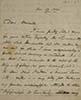
Observatory - GA describes his observation of the projection of a star on the moon's disk: 'Now imagine that you see the moon's limb well, and that you see the star well, with all its rings... The moon approaches the star - goes right over it...the outermost ring of the star considerably within the moon's limb - till when it is satisfied with shewing itself in this ridiculous manner puff it goes out - like a candle...what is one to make of all this?'
Add. MS a/207/12
·
Unidad documental simple
·
17 Aug. 1826
Parte de Additional Manuscripts a
JH's reasons for declining to become a candidate for the Lucasian Chair: He does 'not wish to devote myself exclusively or par excellence to any one branch of science - perhaps too a consciousness that I prefer physical to mathematical science'. Any science he does do 'I had rather should be considered as done an amateur than as a matter of duty and profession'. JH has written to [James] Wood to canvass for Babbage. JH has become 'an ultra-Huttonian in regard of long geological periods'.
Add. MS a/209/12
·
Unidad documental simple
·
1 Apr. 1833
Parte de Additional Manuscripts a
E. I. Coll. - Thanks WW for his present ['Astronomy and General Physics Considered with Reference to Natural Theology', 1833]: 'I can assure you now with perfect sincerity that I have been quite delighted and much instructed by many parts of the work. Perhaps the very early portion of the volume is not quite so good as the rest; but the great mass is excellent; and on the whole it appears to me that you have brought forward very valuable materials for your purpose, and have arranged and applied them in a very masterly and striking manner. The proof of design are indeed every where and so apparent that it is hardly possible to add much to the force of the argument as stated and illustrated by Paley; but still it is gratifying to contemplate the new illustrations which the almost infinite variety of nature furnishes, and these you have brought forward in abundance'. TRM is not quite so sure about the smaller work WW sent ['On the Uses of Definitions', 1832]: 'I confess I was a little alarmed at it at first; and thought it was an attack upon my definitions in Political Economy, which I certainly do not consider as useless. I agree with you in thinking that new definitions of terms are not always necessary to get at truth; and that the most exact definitions are not so much the causes as the consequences of our advances in knowledge. At the same time, I should say, that in regard to this latter position, they act and react upon each other, and that without some understanding as to the meaning of the words used the advances in knowledge would be very slow, though it might still be quite true that you would not arrive at the very best definitions, till a very great progress had been made. You yourself refer to some definitions which you acknowledge to be useful though they might subsequently give way to others more complete. In Political Economy subsequent to the work of Adam Smith, it might be expected that some facts had been classed which required names in order that we might refer to them, and talk of them; and what I have done chiefly has been to adhere to his meaning of these names, where he had not himself used them in different sense. Surely you must agree with me in the utility of persuading people if possible to use the same terms in same senses. However, TRM understands that WW's attack was on Richard Whately and not him - 'so I will say no more'.
Add. MS a/213/12
·
Unidad documental simple
·
[18 Apr. 1859?]
Parte de Additional Manuscripts a
AS would be happy to come to EA's dinner party next Friday. AS has hopefully prevented his bad cough turning into bronchitis by not going out in the evenings. AS has a tendency to feel giddy.