
HOUG/4/117-119
·
Item
·
16 Nov. 1854-[1873?]
Part of Papers of Richard Monckton Milnes, Lord Houghton
3351 results with digital objects
Show results with digital objects
Add. MS a/80/117-119
·
Item
·
1842-1845
Part of Additional Manuscripts a
HOUG/29/117-119
·
Item
Part of Papers of Richard Monckton Milnes, Lord Houghton
HOUG/222/117-122
·
Item
·
22 Jan. 1877-27 Jan. 1877
Part of Papers of Richard Monckton Milnes, Lord Houghton
Add. MS c/73/117-122
·
Item
·
1859-1869
Part of Additional Manuscripts c
Six letters.
HOUG/230/117-130
·
Item
·
[1840s] - [1860s]
Part of Papers of Richard Monckton Milnes, Lord Houghton
126: Letter from John Ruskin to Annabella Hungerford Milnes, [1865?]
BABN/4/117-139
·
Item
·
18 Nov 1830-16 Mar 1831
Part of Papers of the Babington family of Rothley Temple
HOUG/26/117-144
·
Item
Part of Papers of Richard Monckton Milnes, Lord Houghton
SMIH/53/117-152
·
Item
·
c 22 Sept 1909-[1?] Sept 1922
Part of Papers of Sir Henry Babington Smith
Includes picture postcards showing: Ostende; an Egyptian statue; Egypt. Letter of 25 Aug 1922 (150) has an additional note from Lady Elisabeth Mary Babington Smith to Margaret.
PETH/5/117a
·
Item
·
c. 1949
Part of Pethick-Lawrence Papers
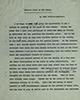
A tribute to Nehru, written for an unidentified volume.
(Carbon copy of a typed original, corrected by hand in pencil. Written some time after the assassination of Gandhi on 30 Jan. 1948.)
—————
Transcript
INDIA’S PLACE IN THE WORLD.
by Lord Pethick-Lawrence.
I am happy to be given the opportunity to pay a tribute to Pandit Jawaharlal Nehru in the pages of this volume. During the years that I have been privileged to count him among my friends my admiration for his qualities has steadily grown. But he has told me that where so many have rendered service to his country he dislikes being singled out for special praise. On the personal side I will content myself therefore with the one incontrovertible statement that India has been indeed fortunate to have as her first Prime Minister a man of his noble character, rich and varied experience and exceptional breadth of outlook.
India has secured control of her own destiny at a time when the whole civilisation of the world is being reincarnated. Old customs and old ideas which have held sway almost from the dawn of history are being discarded. The nation-states of Western Europe in which these ideas were recently embodied are fallen from their high estate. New thoughts are filling the minds of men and women. Some of these have already taken shape. Others are in the realm of the subconscious waiting to be born. India has not merely to adapt herself to these kaleidoscopic changes in the pattern of human life, she has also to play an active part in the conception and gestation of the civilisation that is to be. How important this part is will be realised when we descend from the general to the particular.
First, on the purely material plane, the world is being transformed by the new powers of mass production, radio, television, flight, radar and atomic fission. Every one of these is capable of being used to set men and women free from the sordid scramble for animal existence and enable them to develop to its full stature their physical, moral and spiritual being. But alternatively they may be abused so as to bring about the greater enslavement and degradation of the human race. Which shall it be? The voice of India will be an important factor in the decision.
Next come the recent biological discoveries including new means of eradicating disease in men plants and animals. It is even possible that we are on the eve of revolutionary changes in the whole matter of the growth & production of food. India has suffered grievously in the past from malnutrition and preventible ill health. The responsibility now rests upon her own scientists to find out the remedy and upon her statesmen to apply it.
The civilisation now passing away was founded upon inequality. Even upright and religious men and women seemed to see nothing wrong in a structure of society in which some people lived in luxury while others toiled unceasingly and remained in squalor and degradation. But Gandhiji was one of those who saw in this system an affront to human dignity; and he inveighed against it unceasingly by precept and example. At first the doctrine of communism in its pure form seemed to be the answer but in its application it has got entangled in power politics and totalitarian dictatorship. The new civilisation has to be founded upon human equality; and India in memory of her Mahatma and in accord with the generous impulses of her Prime Minister will wish to take a foremost place among the nations who are imbued with the new spirit.
In the realm of internal government India has astonished the world by her achievement. Even those of us who had the greatest faith in her statesmen scarcely dared to hope that she would be able to integrate the whole of her territory in so short a time and with such general approval. The highest praise is due to all those who have contributed to this remarkable result. It augurs well for the future stability of her State and provides a fine example to other nations.
What of the international outlook? Here I am convinced that India has a part of paramount importance to play. She occupies a pivotal place on the map of the world. She looks westward to Europe and the Atlantic Ocean, eastward to China to the Pacific and to the Americas, northward to the lands of the Soviet Union in Asia, South West to the varied races of Africa and South East to the new civilisation of Australia and New Zealand. So situated she cannot exist isolated and detached.
The world needs friendship and co-operation. It needs the mutual interchange of materials and ideas. Above all it needs peace. But peace like liberty requires eternal vigilance for its preservation. It requires the constant avoidance of the pairs of opposites—arrogance and cowardice, aggressiveness and subservience, self-sufficiency and undue dependence, anarchy and regimentation. A free and democratic India in close association with other likeminded free and democratic peoples can be a great bulwark of peace and of constructive fellowship in the community of nations.
Long may Panditji be spared to exercise his wise leadership in guiding the destinies of his country!
PETH/8/117a
·
Item
·
1961 x 1963
Part of Pethick-Lawrence Papers
PETH/5/117b
·
Item
·
c. 1949
Part of Pethick-Lawrence Papers
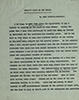
Text as 5/117a.
(Carbon copy, corrected by hand in ink.)
FRAZ/29/118
·
Item
·
5 Dec. [1924?]
Part of Papers of Sir James Frazer
Ambassade de France à Londres - Is touched by the sentiments Frazer has expressed on Saint Aulaire's departure from London, has been pleased to get to know him and thanks him for his work to ensure close ties between the two countries.
TRER/2/118
·
Item
·
13 Dec [1921]
Part of TEST
13a Hanover Terrace, Ladbroke Grove, W.11. - Fears that he will not be able to visit this vacation because he has lectures to give and prepare and is going away for Christmas. Is sorry that she does not have better news of Norton and unsure whether being 'shut away in a rest-cure' is the best thing for him. Mrs Waley [Rachel Sophia Waley?] returns tomorrow; he understands she is much better.
TRER/3/118
·
Item
·
20 June 1912
Part of TEST
Harnham, Monument Green, Weybridge. - Asks whether he is quoting a stanza beginning 'Walker with one leg' correctly, and whether Balzac composed the C.H. ["Comedie Humaine"] in a summer house. Looks forward to seeing Trevelyan on Wednesday, and hopes that he will be coming out to India in the autumn. Is reading [James?] Fergusson and Vincent Smith [on India].
TRER/7/118
·
Item
·
27 Feb 1911 [postmark]
Part of TEST
Postmarked Staines. - Has just received Trevelyan's pencil letter: does not remember receiving anything about Act IV [of "The Bride of Dionysus"] since Trevelyan visited; Tovey will adapt his suggestions in the letter of 23 February for the end of Act I. Begins to say that he cannot fit in 'Since evil is no evil' for musical reason, but realises in writing that he can. Has tackled Theseus slightly differently from the plan in his last letter, so he no longer seems to blame P[oseidon?] for not fighting Zeus.
TRER/9/118
·
Item
·
19 Mar 1900
Part of TEST
The Bri[tish] Mus[eum] Lib[rary]. - Is staying at Hare Court till Wednesday, when [Charles] Sanger starts for Greece; he is no better yet. Wrote to Aunt M[eg Price] about the piano suggesting 'delicately' that they might make an exchange [of an upright for a grand] one day; thinks it will be all right. Went on his bicycle to Dorking to see the Frys, and saw Laurence Binyon and another friend, with whom he went up Leith Hill. Has got on quite well with his play recently. Would like to see Bessie in her 'new spectacles, like a professor'; Curry & Paxton say Ambro [Hubrecht]'s spectacles are ready, asks whether he is to send them or bring them over. Thinks "Wuthering Heights" 'altogether more wonderful' than anything Charlotte [Bronte] wrote, though he does not 'depreciate Villette etc'. Forgot to take the measurements of the table but will as soon as he returns. Teases Bessie about her old fondness for 'the Sweedish [sic] Inst. doctor' [see 9/37]
TRER/14/118
·
Item
·
19 Aug 1928
Part of TEST
Hallington Hall, Newcastle-on-Tyne. - Has been looking at the books left to him in their father's will, and believes that Bob should have the collection of over a hundred volumes in the 'Pipontine [sic: Bipontine] or Deux Ponts Edition in old white binding', currently in Sir George's study, many of which contain notes by Macaulay. Feels that Bob would appreciate these notes much better than he would himself, since they are 'on points of classical scholarship and history in which [he is] an ignoramus'. Would give him great pleasure to think of the books 'in the new Library at the Shiffolds' and often read by Bob.
TRER/10/118
·
Item
·
18 Jun 1911
Part of TEST
Hotel des Alpes, Mürren. - Arrived yesterday and plan to stay for more than a week; it is a 'wonderful place' though the air is 'rather fatiguing' at first. She will rest today; Sir George is very well and 'walks a great deal'. The electric railway to Interlaken is pleasant and travels through some fine passes. Very sorry to hear from Elizabeth about the Russells; [their separation] is 'surprising and very sad'; sure Russell is 'difficult, & the family are rather uncompromising' but he is 'a quiet good fellow'; does not know her [Alys] well but thought she seemed 'to belong to another "monde"'. Likes to think of Julian almost walking; asked what is settled about the nurses, and whether Mrs Catt is going to the hospital; it is very sad. People must be very anxious about the weather [for the Coronation]; is glad to be 'out of it all'; Mürren is completely quiet, with no road for carriages, and Bob would love it. Glad Julian likes his cart. George says [he and Janet] are going on 12 July to the Lakes, and would like to come to Wallington in September; asks if Elizabeth and Robert could be there for some of that time. Is glad the [Lake] Hunt was a success once more, it is 'a wonderful institution'. Thinks C[harles] and M[ary] will enjoy themselves at the [Coronation] festivities. Sends love to Robert, and asks if Mr [Roger] Fry is coming.
TRER/16/118
·
Item
·
[July?] 1882
Part of TEST
Robert's place in class, with masters' comments, for Latin, French, Divinity, History, Geography and Arithmetic, with comments on English, Music, Drawing and General Conduct. Date for the beginning of next term given.
TRER/21/118
·
Item
·
20 Dec 1946
Part of TEST
9 Grand Parade, St. Leonards, Sussex. - Can 'hardly hold a pen' [due to arthritis] but must send thanks for the 'beautiful translations from the classics' [this year's "From the Shiffolds"]; it 'takes a poet to render poetry into another tongue'. Christmas and new year best wishes.
MONT II/A/1/118
·
Item
·
24-25 May 1915
Part of Papers of Edwin Montagu, Part II
The British Hospital, Hôtel Bellevue, Wimereux.—(24th.) Describes her journey to Wimereux, her impressions of the hospital, and her timetable of work. There is much discussion of the crisis, and she nearly quarrelled with a doctor who questioned Winston’s sense of decency.—(25th.) The railway and the ambulances are noisy. She has been to Boulogne to see Frances, and has tried to read ‘Joseph’. Is bored by the prospect in front of her, but will soon settle in. Urges him to pass on political gossip and war news.
—————
Transcript
The British Hospital, Hotel Bellevue, Wimereux
(Not my address | I gave you that didnt I?) {1}
Monday evening May 24th 1915
My darlingest not a vestige of a submarine disturbed our crossing and we arrived safely to find Sir Henry awaiting us on the platform. I couldnt telegraph as it takes hours. We came straight out here. The hospital is a rather squalid hotel in a street facing onto a small river, but one sees the sea not 300 yards away. I’ve not looked into the wards yet, but start tomorrow. Its much less arduous than the London breakfast at 7.30 instead of 6.30 and supper 8.15 instead of 9.30, so you see we are in clover. I’ve a reasonably nice room in which I’ve stowed myself and belongings with difficulty. After today I shant see much of the Normans, which I dont regret. They talk about the crisis a good deal, & I’m sorry to say I’ve nearly had a quarrel with a foul little doctor about whether Winston had any sense of decency or not. {2} I feel resigned and detached about the prospect of these next few weeks, but I miss you horribly. I’ll finish tomorrow. Goodnight, I hope you are dining somewhere and having fun. {3}
The noise is awful in this place, I hadnt realised that apparently the most vital railway from the whole world to the front passes within 20 yards of us, also ambulances drive up from time to time. I’m just going to have breakfast. Sir Heinrich has to pass all my letters so I shall feel a certain reluctance to write every day to you, but I daresay I shall become quite brazen about this. {4}
I’ve been into Boulogne and seen Frances, who has again been very anxious about Edward who has had a temp of 104, he’s better to-day.
My darling: Joseph is one of the most tedious writers I’ve ever come across. I tried him last night and found it anything but stimulating, or is it that all forms of religion, and the observances which accompany them & to which the religious attach so much importance, are bound to appear very foolish to someone like me. Still it doesnt matter as its not going to affect you or me afterwards.
I’ve just got your telegram {5} (11·30) thank you so much, I wonder when I shall get a letter from you. I’ll confess to you at once that I feel very much bored at the prospect in front of me, but then one always feels like that for the first few days, I shall soon become thoroughly happy in my new surroundings.
Write me every scrap of political gossip you can find, also any war news, as you know I never read the papers so I rely on you.
The doctors are mostly half casts† and very squalid looking.
This is worthy of your collection of letters at Cambridge its every bit as boring. What fun we had then. I wish I was back in England.
My love to you always
Venetia
—————
Partly written in pencil (see below).
{1} ‘Not … didnt I?’ is written below the printed address in pencil. The brackets have been supplied.
{2} The allusion is to Churchill’s handling of the Dardanelles campaign.
{3} The writing changes from ink to pencil here.
{4} A new sheet begins here. What follows was written slightly later.
{5} This does not survive.
† Sic.
MONK/B/118
·
Item
·
14 May 1848
Part of Papers of the Monk and Sanford families
RAB/A/118
·
File
·
1927
Part of Papers of Lord Butler
RAB/F/118
·
File
·
1949
Part of Papers of Lord Butler
Includes ms. Redrafts of certain sections. Utilises Ministry of Education files and RAB's personal archive
SMIH/94/118
·
Item
·
[Dec, c 1910]
Part of Papers of Sir Henry Babington Smith
SMIH/91/118
·
Item
·
[22 Jan. 1911]
Part of Papers of Sir Henry Babington Smith
SMIH/74/118
·
Item
·
2 Jan 1895
Part of Papers of Sir Henry Babington Smith
SRAF/I/118
·
File
·
1945
Part of Papers of Piero Sraffa
TRER/46/118
·
Item
·
21 Dec 1906
Part of TEST
Handed in at Holmbury St Mary; sent to Welcombe, Stratford on Avon. - 'Son [Paul] born [yesterday] evening both doing very well indeed Trevelyan'.
Sent 9.50 am, received at Stratford on Avon office 10.52 am.