
BELL/3/1
·
Pièce
·
[c.1957]
Fait partie de Papers of Clive Bell
72 résultats avec objets numériques
Afficher les résultats avec des objets numériques
TRER/25/8/1
·
Pièce
·
31 Oct 1938
Fait partie de TEST
King's College, Cambridge. - Thanks Trevelyan for granting permission to use his translation of Sophocles' "Antigone": it is just right for the purpose, and Sheppard has 'always ranked it very high'; when he saw it acted by the girls of Hawnes School near Bedford fifteen months ago he was 'delighted'. Glad that Trevelyan agrees with him on the interpretation of [line 523, "οὔτοι συνέχθειν, ἀλλὰ συμφιλεῖν ἔφυν"], which he thinks expresses the 'most important part of the play'. Will go through the text carefully before printing and let Trevelyan know if he thinks of anything else, as well as showing him the introduction. Has just heard from May Lowes Dickinson that she and her sister are very pleased with Trevelyan's poem about [their brother] Goldie; Sheppard did not know it had been printed [in the "New Statesman"] but is pleased that it has; Maynard [Keynes] showed it him a while ago, and they 'agreed that it was very beautiful and true'.
RBTN/D/1/1
·
Pièce
·
1911, n.d.
Fait partie de Papers of Sir Dennis Robertson
SRAF/I/100
·
Dossier
·
1936
Fait partie de Papers of Piero Sraffa
DOBB/C/A/105
·
Dossier
·
1927–28
Fait partie de Papers of Maurice Dobb
TRER/24/105
·
Pièce
·
Aug-Sept 1943
Fait partie de TEST
Contains: poem, "The Flycatcher", by Sylvia Lynd; "Sicily" by S. S. [Sylvia Sprigge]; "Intellectual Conversation" by Arthur Waley, which mentions Maynard [Keynes], Francis [Birrell], Hugh Dalton, Roger Fry, Gerald [Shove] and Sebastian [Sprott]; sketch in memory of Edmund [not Edward, as on cover] Gosse by Max Beerbohm; poem, "Lying Among the Yellow Flowers", by Kenneth Hopkins; poem, "Complaint", by Diana Lodge.
TRER/6/109
·
Pièce
·
15 July 1932
Fait partie de TEST
Calcutta. - Letter of introduction to Arindam Dutt, who is coming to England to study for the Bar and join a British university; his father, Charu Dutt, a retired Civil Service man is 'one of the finest men in India'. Young Dutt will try to get into Cambridge through the 'usual wearisome official channels' such as the India High Commissioner's office; should he fail, Suhrawardy asks if Trevelyan can give him an introduction to Lowes Dickinson, Keynes, or his brother [George]. Also asks if Trevelyan can invite Dutt to his club; fears he will have a lonely time at first. Has been enjoying "The Fountain", by [Charles] Morgan, which has much about Holland and the Dutch; thought Bessie might be interested, if she has not read it. A postscript notes that their mutual friend Chanda has married young Dutt's only sister.
Add. MS c/35/13
·
Pièce
·
16 July 1905
Fait partie de Additional Manuscripts c
TRER/2/131
·
Pièce
·
16 May [1924]
Fait partie de TEST
Kings Coll. Camb. - Thinks he would like to visit for Whitsuntide, unless his sisters' plans prevent it; he thinks though that they will be in Northumberland. May is much upset [following the death of their sister Janet]. Lunched with [Albrecht?] Mendelssohn Bartholdy and liked him, though Keynes is probably right that he has no 'insight'.
TRER/21/15
·
Pièce
·
13 Sept 1920
Fait partie de TEST
Hotel du Kélenn, Carantec (Finistère). - In case his postcard [21/19] is 'delayed or, as I fear, unintelligible': has the "Agamemnon" proofs and Bob's manuscript; it 'looks good'; agrees with one of Bob's points, which they can discuss when they meet. Gives his address in Dinard for 18-23 September; will then return to England, and will be in London until 30 September. Can meet Bob in London or in Dorking; letter sent to the United University Club will find him, though he may stay at 46 Gordon Square [Maynard Keynes's house]. Would be good if Bob could arrange for [Armstrong] Gibbs to meet them; has just sent Gibbs a card about this; gives his address. Has told [George Brimley] Bowes to hold up "Cho[ephoroe]" and send back the manuscript to Bob if it is not being printed yet; if it is, Bowes is to contact the [Cambridge University] Presss to 'make the names of the characters more prominent' and try to get proofs to them by the 24th. Thinks Bob's version 'magnificent'.
SRAF/C/155
·
Dossier
·
1938
Fait partie de Papers of Piero Sraffa
TRER/4/157
·
Pièce
·
21 Jan 1914
Fait partie de TEST
Carlton House, Rangoon. - His great disappointment at Trevelyan's failure to come out to Burma: quotes from Shelley's "The Revolt of Islam"; only E.M.F. [Forster's] failure could match it. Burma is as worth seeing as India: Rangoon is worth a visit, Moulmein [Mawlamyine] magnificent, according to reports, Mandalay charming and Pagan [Bagan] very interesting. The people are the 'main sight of the country': describes them at length: their clothing, appearance and physique, dance, music and acting. They have a common passion for the theatrical performance called the pwe; Luce has seen all varieties of this, from a primitive stage in the jungle to the grand annual Wingaba Pwe, which he describes in detail: the crowds and general scene, as well as the chief actors, Aung Battla [Aung Bala?] and Po Sein. The letter may be incomplete as there is no extant signature but two postscripts, one initialled: Luce is sorry [Goldie] Dickinson has been ill and discusses his own health; he works hard, 'happily among Burmans' at the College, owns a racehorse which keeps him rich, and spends weekends in the jungle sailing and hunting. All the English people are in Rangoon are 'prim or ignoble' apart from one lady, leaving tomorrow, who plays him Scarlatti and Flemish folk songs. Is writing 'bumptious poems.' Is very fond of the chief Burmans, but lives alone. Sends love to Dickinson. Has told Keynes to send him Trevelyan's poems.
TRER/4/158
·
Pièce
·
27 July 1918
Fait partie de TEST
British India Steam Navigation Co. Ltd, S.S. Arankola. - Got Trevelyan's letter just as he was leaving Burma for Sabathu, an I.A.R.O. [Indian Army Reserve of Officers] training school near Simla; writes waiting for the tide at the mouth of the Hoogli. Was happy to see Trevelyan's hand again: had found it difficult to forgive him for not coming to Burma years ago, where he might have made 'friends' of the temples of Pagan [Bagan]. Has been reading Trevelyan's "New Parsifal"; has never seen or heard Wagner but likes the play. He reads little modern poetry, but writes his own 'dolorous sentences in verse', and has just sent a 'gloomy batch' to Keynes, perhaps for publication. "Parsifal" reminds him of Trevelyan reading "Mustapha" and "Alahan" to him; supposes it is hard to get the complete works of Greville these days, but he would very much like to read his poem on taxation and the Royal Exchange. Still remembers 'the fraternity' [the Apostles]; has learned to love Burma and its people, and only 'a foolish sense of duty to phenomena' drives him to the army. Wishes Trevelyan had written more about himself, Forster and Dickinson. 'Schloss (Waley)' sends him his Chinese poems, and he likes them.
TRER/21/16
·
Pièce
·
18 Sept 1920 [postmark]
Fait partie de TEST
Postmarked Dinard. - Thanks Bob for his card; will be at 46 Gordon Square at 2 pm on Friday; hopes they will find the house [Maynard Keynes's house] open. They will need a piano if [Armstrong] Gibbs comes, and might go to the O. &. C. [Oxford and Cambridge] Musical Club in Bedford Square. Is engaged for dinner at 7 pm, but they should have had time for 'good work'.
GOW/C/2/16
·
Pièce
·
17 Sept 1944
Fait partie de Papers of A. S. F. Gow
Tilton, Firle, Lewes. - 'I have been reading... your Memoir of Stephen Gaselee. But alas you have copied the mistake... in the Cambridge Review....
TRER/4/160
·
Pièce
·
30 Nov 1922
Fait partie de TEST
University College, Rangoon. - E. J. Farmer would like to meet Trevelyan; he is a senior Indian Civil Service man in Burma who due to old age and 'the stoniness of Burma' would like to do some political or social work in England. Asks if he could be introduced to people such as Woolf, Allen, Keynes and Desmond MacCarthy, and put up for membership at the 1917 Club if that still exists.
PETH/1/176
·
Pièce
·
5 Mar. 1924
Fait partie de Pethick-Lawrence Papers
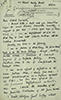
107 Albert Bridge Road, S.W.11.—Is in favour of stabilising the price level and therefore does not believe the Treasury Minute should be abrogated at present (see 1/192), as it is a defence against inflation.
(Printed letter-head of the London School of Economics, which Dalton has enclosed in square brackets.)
—————
Transcript
107 Albert Bridge Road, S.W.11.
5/3/24.
Dear Pethick Lawrence,
I should like a talk with you sometime before the next Finance Committee meeting. I regret to find that I shall again have to leave early, as I have an engagement at 6.30 on that day to dine with Charles Latham and the London Accountants.
Shortly, my view is the following.
I am in favour of stabilising the price level now & in the near future, though, looking further ahead, I hesitate to commit myself to a definite policy. Many factors seem to me to complicate the distant view.
I am more afraid of inflation in the near future than, I think, you are. I want stabilisation as a defence against the F.B.I., no less than against the old-fashioned deflationist authorities, who are, I think, the weaker of the two possible disturbers of the price level.
I don’t, therefore, feel happy about abrogating the Treasury Minute at this stage. It is our only real defence against inflation at present.
Nor am I so certain as, I think, you are that the Minute will operate to check a healthy, as distinct from a hectic & inflationist, trade revival in the near future.
Keynes said a few months ago at a Committee, of which I am a member, that he thought there was a good deal of margin in the situation, even with the Treasury Minute unchanged. In addition to the margin in the Currency Note Issue, he attached importance to the prospect, with reviving trade, of a more rapid circulation of bank deposits. I would add another factor, pointing in the same direction, namely the prospect of an increase in trade credits (between business men,—I don’t mean bank credits), as confidence grows.
Further, our situation may be eased by a rise in American prices, sufficient to restore the pre-war parity of exchange & lead to British imports of American gold. This has been long in coming, but it may come quickly, if the Federal Reserve Board’s stabilising policy gives way before the strong forces opposed to it.
My present feeling, therefore, is to pronounce in favour of a stable price level as our immediate objective, without committing ourselves to anything very general in the way of economic principles, & not to mention explicitly the Treasury Minute. Nor would I say that a future rise in bank rate is undesirable. If prices continue to rise as they have been doing lately, it may be desirable to raise bank rate in order to secure stability. My belief, (in opposition to that of others, I hear) is that you can stabilise any level of price you choose, & that there is no causal relation between the level chosen & the volume of unemployment.
If, for the time being, we could get the Govt to agree to stabilisation of the price level as a principle, and, implicitly, to whatever measures may be required to secure it, I should feel satisfied.
But I wouldn’t meet trouble half way, or give any encouragement to profiteers, by proclaiming in advance that more money shall be printed than the Treasury Minute allows.
Yours sincerely
Hugh Dalton.
SRAF/D/1/18
·
Dossier
·
pre 1928
Fait partie de Papers of Piero Sraffa
TRER/17/183
·
Pièce
·
15 Jan 1945
Fait partie de TEST
Lord Keynes, 46 Gordon Square, W.C.1 [printed; postmarked Lewes]; sent to Trevelyan at the Shiffolds but forwarded to Alexandra Hotel, Lyme Regis, Dorset. - Thanks Trevelyan for his New Year's card ["From the Shiffolds"?], which he 'read with pleasure, hearing your voice and seeing yourself in the mind's ear and eye'.
TRER/21/19
·
Pièce
·
13 Sept 1920 [postmark]
Fait partie de TEST
Postmarked Carantec. - Has received Bob's letter and proof [of "Agamemnon"]no further post here as he leaves on Friday. Has decided to return to England on 24 September; asks Bob to arrange a meeting with Armstrong Gibbs, giving his address, either at Dorking or 46 Gordon Square [Maynard Keynes's House], where Sheppard will be from 24-30 September. Thinks the "Agamemnon" looks 'very good'; tells Bob to hold up [the printing of the] "Choephoroe" if he likes; he should tell [George Brimley] Bowes.

PETH/2/192
·
Pièce
·
21 Sept. 1918
Fait partie de Pethick-Lawrence Papers
46 Gordon Square, W.C.—Invites him to contribute an article to the Economic Journal on the subject of ‘Deflation after the War’.
(Dated ‘21.9.10’, but the year is wrong: Pethick-Lawrence’s article ‘Deflation and Prices after the War’ was published in December 1918.)

PETH/2/193
·
Pièce
·
4 Oct. 1915
Fait partie de Pethick-Lawrence Papers
Royal Economic Society, 3 Gower Street, W.C.—Would gladly consider an article from him for the Economic Journal on the same subject as his letter in The Nation (i.e. the economics of war; see 2/225).
PETH/2/194
·
Pièce
·
6 Dec. 1915
Fait partie de Pethick-Lawrence Papers
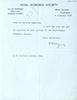
King’s College, Cambridge.—Will send him twenty reprints of his article in the forthcoming number of the Economic Journal (see 2/226).

PETH/2/195
·
Pièce
·
18 Sept. 1919
Fait partie de Pethick-Lawrence Papers
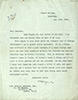
Charleston, Firle, Sussex.—The American economists and financiers most likely to be interested in a capital levy are Seligman, Taussig, and Norman Davis.
—————
Transcript
Charleston, | Firle | Sussex
18. 9. 19
Dear Lawrence,
I am really rather at a loss as to how to answer your letter about Americans interested in a Capital Levy;—the project is so remote from their ideas and their necessities. Amongst economists there is Seligman of Columbia and also old Taussig. Amongst financiers I hardly know whom to mention,—perhaps Norman Davis, whom you may find in Washington, is the best. With any of these, if you meet them, and with any others who know me, certainly make use of my name to any advantage you are able. I presume you will be seeing the New Republic crowd in any case.
Yours sincerely,
J M Keynes
PETH/2/196
·
Pièce
·
27 Jan. 1920
Fait partie de Pethick-Lawrence Papers
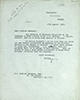
King’s College, Cambridge.—Is pleased that Pethick-Lawrence likes his book (The Economic Consequences of the Peace). Agrees with his views on foreign investments.
PETH/2/197
·
Pièce
·
27 Aug. 1920
Fait partie de Pethick-Lawrence Papers
Charleston, Firle, Sussex.—Recommends he contact the Economic Section of the League of Nations for information about the budgets of European countries (see 2/228).
PETH/2/198
·
Pièce
·
14 Feb. 1923
Fait partie de Pethick-Lawrence Papers
46 Gordon Square, Bloomsbury.—Suggests sources of information on the subject mentioned by Pethick-Lawrence (the provision of free services; see 2/230), and outlines the main argument against providing such services. The subject is unsuitable for the Economic Journal, and Pethick-Lawrence’s proposal is almost certainly unsound.
PETH/2/199
·
Pièce
·
17 Apr. 1924
Fait partie de Pethick-Lawrence Papers
46 Gordon Square, Bloomsbury.—Gives details of the German indemnity due to the British Empire under the Spa agreement (see 2/232), and refers to a resolution by American bankers on Inter-Allied debts.
RBTN/C/3/2
·
Dossier
·
1933–37
Fait partie de Papers of Sir Dennis Robertson
RBTN/D/1/2
·
Dossier
·
c1910
Fait partie de Papers of Sir Dennis Robertson